Woodoku - Wood Block Puzzle
Tripledot Studios LimitedPuzzle
4.242.08K Reviews
- Version
- 4.14.00
- Installs
- 100.00M
- Age Rating
- Everyone
Screenshots


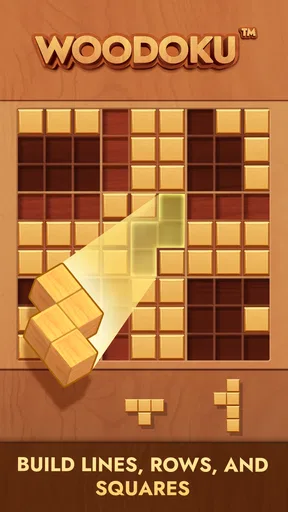

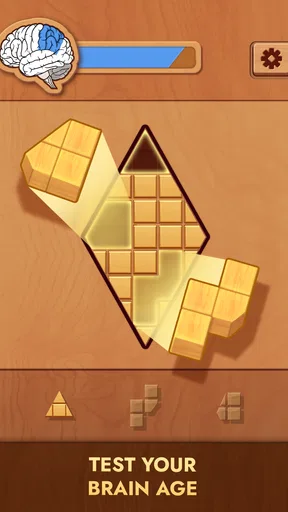
Our Review of Woodoku - Wood Block Puzzle
 Analysis by Appyee
When I want a puzzle that asks for a little thought without demanding my full attention, I’m drawn to games that let me pause and reconsider a move. Woodoku - Wood Block Puzzle has that easy-to-grasp appeal: arrange wooden pieces on a board, make space by clearing lines or squares, and try to keep your options open. I enjoy it most in short bursts, though the urge to improve a run can easily turn a quick break into a longer one.
Small goals make the first session easy
The basic objective gives me something useful to focus on immediately: fit the pieces, clear space, and avoid boxing myself in. There’s no complicated setup to learn before I can start making decisions. That makes it a friendly choice when I have only a few spare minutes, or when I want a casual puzzle that doesn’t require following a story or remembering a long chain of instructions.
What makes those early moves more interesting is that clearing a single line is not always the best immediate choice. I try to notice whether a placement also prepares a square or opens room for an awkward piece that may arrive next. That small shift—from asking “Can this fit?” to “What does this placement leave me?”—is the first satisfying step toward playing more deliberately.
Progress you can read from the board
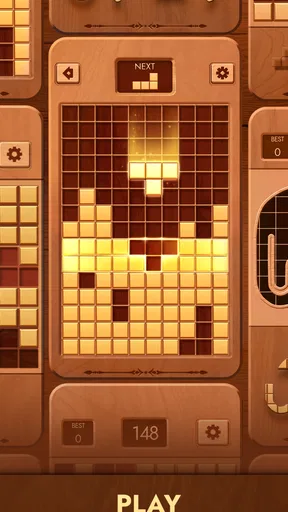
The board itself is the clearest signal of how a run is going. An open grid leaves room to adapt; a crowded one makes every remaining gap more valuable. I find that more useful than chasing a score alone, because it shows me the consequences of my own choices while there is still time to respond. When I do beat a previous high score, it feels like a practical sign that I managed the space better, not just that I got lucky.
A helpful habit is to scan the whole board before placing a piece, rather than focusing only on the nearest possible clear. I look for gaps that could become unusable, then consider whether a placement can clear more than one area or preserve a flexible patch of space. This is especially worthwhile when a piece has an awkward shape: using it merely because it fits somewhere can leave the next decision much harder.
The challenge comes from consequences, not a clock
Since I can take my time, the pressure comes from the board gradually losing room rather than from a timer. That makes the game calmer than fast-moving block puzzlers, but it does not make every choice comfortable. One placement can close off several useful spaces, and because pieces cannot be moved afterward, a careless decision may shape the rest of the run.
I like this kind of difficulty because it gives me room to think without guaranteeing that I will find a perfect answer. When the board gets tight, I have to choose which problem to solve first and accept that another part may become awkward. If you enjoy speed, combos driven by quick reactions, or levels with a clearly scripted solution, this more open-ended pressure may feel less exciting.
Challenges and levels
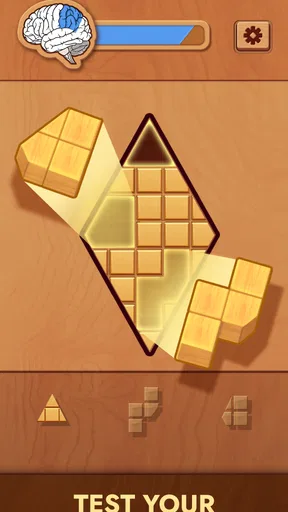
As you advance, Woodoku introduces new challenges. The blocks get more complex, and the game requires more strategic thought. There are daily challenges and quests that keep the gameplay fresh, offering rewards that motivate you to keep playing. I found the daily challenges particularly enjoyable, as they provide a nice break from the regular gameplay.
Those extra goals change the reason I open the game. A regular board invites me to improve my own play, while a daily challenge gives a session a more defined purpose. I find that useful when I want a quick puzzle with an endpoint instead of an open-ended attempt to keep a board alive. It also gives me a natural stopping point: once I’ve had a go at the day’s task, I can put the phone down without feeling that I abandoned a run halfway through.
Where it fits among puzzle games
Compared with Sudoku, this is less about filling a grid by deduction and more about judging space and shape. Compared with familiar falling-block games, the unhurried pace gives me time to study the board, but placements still have lasting consequences. That combination suits me when I want a quiet logic break. If I’m after number patterns, a traditional Sudoku app is a better fit; if I want quick reflexes and constant movement, a timed block game is likely to be more exciting.
It also works well as a low-commitment companion to a routine. I can play while waiting for an appointment, during a short commute as a passenger, or while taking a break between tasks. In each case, I try to finish a board or reach a sensible stopping point before switching attention back to what I was doing. Because it’s easy to become absorbed, I wouldn’t start a run when I need to leave immediately or keep checking the time.
Who will enjoy it—and who may not
I’d recommend it to people who like visual planning, measured decisions, and the small reward of turning a crowded board into open space. It is also a reasonable first step for someone curious about puzzle games but not keen on learning complicated rules. The free-to-play entry makes trying it straightforward, while in-app purchases range from $0.99 to $99.99 per item, so I’d check the purchase prompt carefully if I share a device or want to keep spending controlled.
On the other hand, I would steer away anyone who needs a fresh central mechanic every few sessions. The core pleasure is refining placement decisions, not discovering a radically different puzzle each time. Ads can interrupt the flow, as the original experience notes, and that matters more when I’m settling into a thoughtful run. If interruptions are a deal-breaker, or if you prefer a finite campaign with a clear sequence of solved stages, another puzzle game may suit you better.
The Charm of Woodoku
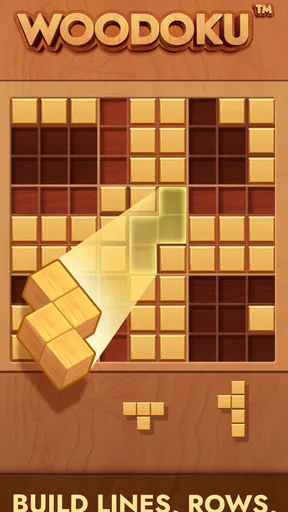
At first glance, Woodoku seems like a straightforward puzzle game. It combines the classic elements of a wood block puzzle with the strategic planning of Sudoku. The goal is simple: fit the wooden blocks into a grid and clear as many rows, columns, or squares as possible. It’s a bit like Tetris, but with a twist that keeps your brain ticking.
Gameplay Mechanics
The mechanics are where this game truly shines. You’re given a 9x9 grid, and it’s up to you to place the given blocks to clear the board. Sounds easy, right? Well, it’s not. The challenge lies in the fact that once you place a block, you can’t move it. So, every decision has to be strategic. I found myself planning several moves ahead, trying to maximize my score.
The game offers a satisfying balance between strategy and relaxation. It’s perfect for those moments when you want to unwind but still keep your mind engaged. Plus, there’s no time limit, so you can take as long as you need to plan your moves.
Visuals and Sound
If you’re into aesthetics, you’re in for a treat. The visuals are clean, with a warm wood theme that’s easy on the eyes. The blocks have a satisfying texture that makes them fun to move around. The sound effects are subtle but effective, adding to the soothing atmosphere. The gentle clicks and pops as you clear blocks are oddly satisfying.
Challenges and Levels
As you advance, Woodoku introduces new challenges. The blocks get more complex, and the game requires more strategic thought. There are daily challenges and quests that keep the gameplay fresh, offering rewards that motivate you to keep playing. I found the daily challenges particularly enjoyable, as they provide a nice break from the regular gameplay.
Why It’s Addictive
So, what makes this game so addictive? For me, it’s the perfect blend of simplicity and challenge. It’s easy to pick up and play, but hard to master. You’re always just one move away from clearing that perfect line or square. The sense of satisfaction when you clear multiple lines at once is unparalleled. Plus, the game keeps track of your high scores, pushing you to beat your own records.
Room for Improvement
No game is perfect, and Woodoku is no exception. While the ads are not overly intrusive, they can sometimes break the flow of the game. However, there is an option for in-app purchases to remove them if they become too bothersome. It would also be nice to see more variety in the blocks or additional game modes to keep things fresh in the long run.
Overall, I’d say the positives far outweigh the negatives. The game’s addictive nature and strategic depth more than make up for any minor inconveniences.
Final Thoughts
If you’re looking for a puzzle game that’s both relaxing and mentally stimulating, look no further. Woodoku - Wood Block Puzzle offers a refreshing take on the classic block puzzle genre. Whether you’re a puzzle enthusiast or just looking for a way to pass the time, this game is sure to provide hours of entertainment. So, why not give it a try? Just be prepared to lose track of time!
What to expect before installing
Tripledot Studios Limited develops this free puzzle game, and its broad audience is reflected in an Everyone age rating. It has a 4.1 average from around 464,000 ratings, with roughly 42,000 written reviews, and has passed 100 million installs. I take those figures as evidence that this is a familiar, widely tried format, not a promise that every player will find it compelling. The game was released on March 25, 2020, and version 4.13.00 lists Android 6.0 as the minimum operating system requirement.
On a practical level, that makes it approachable on a wide range of Android devices, though the age rating should not be confused with a guarantee that every part of the experience will suit every household. The game is free to start, and optional in-app purchases are listed from $0.99 to $99.99 per item. I’d treat those as a reason to review purchase settings before handing a device to a child, rather than assuming the free download means every optional element is free.
Playing with a purpose, then knowing when to stop
The most useful way I’ve found to keep sessions satisfying is to choose a small goal before starting. I might focus on clearing space efficiently, trying to beat my own high score, or simply finishing a daily challenge. Picking one aim prevents every run from becoming an indefinite attempt to do better. It also makes a loss feel more informative: I can identify whether I misjudged a shape, protected the wrong area, or let a tempting clear close off too much room.
For a realistic example, imagine waiting for a delayed appointment. I can open the game, spend a few minutes considering placements, and stop after a challenge or a natural end to a board. If I’m instead waiting for a very brief update or need to stay alert for my name to be called, I’d choose something easier to put down instantly. Woodoku’s calm pace helps, but its “one more try” pull can still make a short wait disappear.
That is the main retention trade-off for me. The familiar board and personal high-score target invite repeated play, while daily tasks provide a reason to return. Those hooks can be enjoyable when I’m choosing to relax; they are less welcome if I’m trying to limit screen time or avoid routine check-ins. I don’t think a daily goal has to become an obligation, and I’d skip it whenever playing starts to feel like keeping up rather than having fun.
How I judge its staying power
Woodoku’s progression is strongest as a gradual test of judgement: the pieces and the state of the board make me adjust, and my own score gives a simple way to notice improvement. Its challenge is less about unlocking a long sequence of destinations and more about learning to preserve usable space under changing constraints. That makes it rewarding for someone who likes replaying a compact puzzle to make cleaner decisions, but less satisfying for anyone who wants a campaign, a narrative payoff, or a steady parade of entirely new mechanics.
My advice is to give it a few sessions and notice what you enjoy: planning several placements ahead, tidying a crowded grid, or working toward a daily goal. If those small decisions are the appeal, the game can become a pleasant part of a break. If you quickly feel that each board is repeating the same task, there is no reason to force yourself through more of it; a Sudoku app, a level-based logic puzzler, or a faster block game may offer the kind of variety you’re looking for.
Final recommendation
I’d keep this installed for quiet moments when I want an unhurried puzzle that still rewards attention. Its rules are easy to approach, but the no-move-back consequence gives each placement weight, and its scoring gives me a personal reason to improve without requiring a timer. The trade-offs are real: ads can interrupt concentration, the basic loop may feel repetitive over time, and optional purchases call for sensible boundaries.
For me, the best recommendation is a qualified one: try it if spatial planning and relaxed replay appeal to you, and use the daily goals as optional prompts rather than duties. Skip it if you need constant novelty, fast action, or a structured progression with clearly authored stages. When the mood is right, this is a tidy little brain break; when it isn’t, another puzzle style will be a better use of your attention.
Verdict
Strengths of Woodoku - Wood Block Puzzle
- Simple and intuitive gameplay.
- Relaxing and stress-free environment.
- No intrusive ads during play.
- Doesn't require an internet connection.
- Visually pleasing wooden theme.
Limitations of Woodoku - Wood Block Puzzle
- Lacks competitive multiplayer mode.
- Limited customization options.
- No daily challenges or rewards.
- Can become repetitive over time.
- In-app purchases can be pricey.
Other Releases by Tripledot Studios Limited
View All
Get Color - Water Sort Puzzle
Puzzle4.8


Nut Sort: Color Sorting Game
Puzzle4.8

Car Out! Traffic Parking Games
Puzzle4.7
Similar Picks in This Category
View All
Block Blast!
HungryStudio4.8

Braindom: Brain Games Test
Lahana Game Studio4.6

AMAZE!
CrazyLabs LTD4.6

Sudoku - Classic Sudoku Puzzle
Oakever Games4.7

Art Puzzle - Puzzle Games
Easybrain4.8

Amaze GO!
Oakever Games4.9
Frequently Asked Questions
What is Woodoku and how does it work?
Woodoku is a puzzle game that combines elements of Sudoku and block puzzles. Players are tasked with placing wooden blocks on a 9x9 grid, aiming to complete lines and 3x3 squares without running out of space. The game ends when there are no more moves available, making strategy and planning essential for high scores.
Is Woodoku free to play, and are there in-app purchases?
Yes, Woodoku is free to download and play on both Android and iOS devices. However, like many free games, it offers in-app purchases. Players can buy hints or remove ads through these purchases, enhancing their gaming experience. It's important to manage these purchases to avoid unexpected charges.
Does Woodoku require an internet connection to play?
Woodoku can be played offline, making it a great option for those who want to enjoy the game without an internet connection. However, some features, such as accessing leaderboards or syncing progress across devices, require an internet connection. Playing offline is perfect for commutes or areas with limited connectivity.
Are there any ads in Woodoku, and how can I remove them?
Yes, Woodoku includes ads that appear between levels or during gameplay. These ads can be removed through an in-app purchase, providing an uninterrupted gaming experience. For players who find ads distracting, this option can significantly enhance their enjoyment of the game.
What are the main strategies for achieving high scores in Woodoku?
To achieve high scores in Woodoku, players should focus on strategic placement of blocks to clear multiple lines and squares simultaneously. It's crucial to plan moves ahead and keep the grid as open as possible. Saving space for larger blocks and avoiding isolated blocks can also help maintain game longevity and score higher.
Play our best games!


